
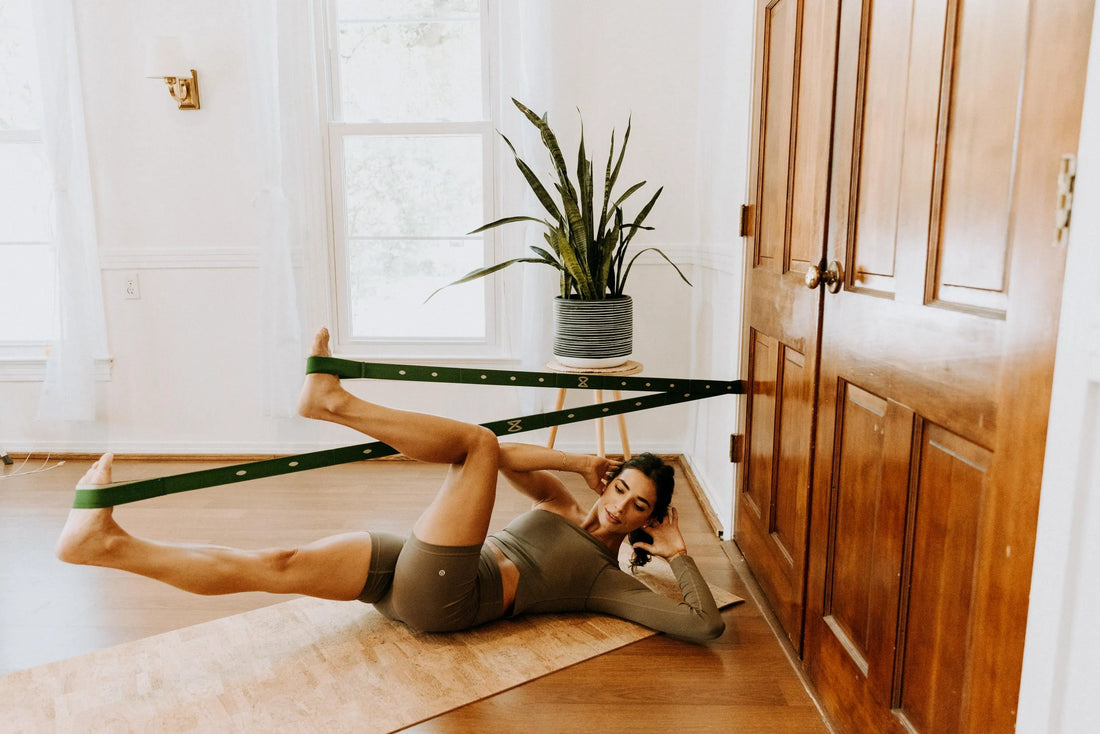
Pilates Bands: A Studio Workout at Home
Quick answer: Pilates bands give you the controlled tension of a reformer without the machine. Pilates in a Box packs two premium bands, a dual-door anchor rated over 1,000 pounds, and app coaching into a drawstring bag, so the studio is wherever you and a door happen to be.
Ever had to skip the studio?
Work ran late. The kids needed you. The drive felt like one thing too many. The class happened without you, again.
The fix is not more willpower. The fix is removing the drive. Bring the studio home, and the workout stops competing with your life.
That is the whole idea behind Pilates in a Box. Reformer-style resistance work, anywhere, on your terms.

What are Pilates bands?
Pilates bands (also called resistance bands, stretch bands, or exercise bands) are elastic bands that add resistance to your movement. Unlike weights, they make your stabilizing muscles do real work, they reward control over momentum, and they stay gentle on the joints the whole way through.
They come in resistance levels from light to heavy, so the same tools that welcome a beginner keep challenging you as you get strong.
Why bands beat the machine for home practice
They mimic the reformer. The controlled tension is the same idea, minus the furniture-sized machine.
They work the whole body. Core, arms, legs, glutes, and back in one session.
Low impact, real results. Joint-friendly tension makes them a favorite for rehab and injury prevention.
They travel. The whole kit fits in a bag. No gym required, no excuses available.
Resistance you control. Change the band or change the reps. The intensity is always in your hands.
Five Pilates band exercises to start with
1. Standing leg lifts (glutes and core). Band around both ankles. Stand tall, brace the core, lift one leg to the side with control. Ten each side.
2. Seated row (back and arms). Legs extended, band around the feet, pull toward the waist and squeeze the shoulder blades. Twelve reps.
3. Squat to shoulder press (full body). Stand on the band, hold the ends at shoulder height. Squat low, drive up, press overhead. Ten to twelve reps.
4. Lying leg press (lower body). On your back, band around the feet, press out like a reformer carriage ride. Fifteen reps.
5. Side-lying leg lifts (thighs). Band at the ankles, lift the top leg slow, lower slower. Ten each side.
Quick sidebar while we are here. I keep a tin of Neuro Gum next to my keyboard when I write these posts. One piece, a few minutes, and the fog lifts before the first sentence lands. Caffeine and L-theanine, no crash. You can find it here: Neuro Gum. (Affiliate link. I earn a small commission at no extra cost to you.)

How to choose the right Pilates band
Material. Fabric bands outlast latex and stay put instead of rolling up your leg mid-rep.
Resistance. Start light. Add tension as the movement gets clean, and only then.
Grip. Non-slip matters most on leg work.
Length. Longer bands open up full-body movements a short loop cannot reach.
Pilates bands vs strength bands, what is the difference?
Pilates bands are built for controlled, low-impact movements that mirror reformer work. Strength training bands carry heavier resistance for lifting-focused training. "Elastic bands" is the catch-all term covering both. If your goal is core strength, toning, and flexibility, stay in the Pilates lane.
How to get the most out of the work
Move slow and own the form. Quality over quantity, always. Breathe out on the effort. Mix bands with bodyweight for variety. And keep the sessions small and daily. Ten to fifteen minutes, most days, beats one heroic hour a week. Move well before you try hard.
FAQs
Can Pilates bands replace a reformer? They will not replace the machine outright, but they recreate the resistance and control that reformer work is built on. For home practice, that is the part that matters.
How often should I use them? Three to five sessions a week builds strength and flexibility. A few focused minutes on the off days still counts.
Are they good for beginners? Yes. Start with light resistance and let the band grow with you.
Can I combine them with other training? Yes. They pair clean with yoga, weights, and bodyweight work.
How do I store them? Cool, dry, out of direct sun. Treat them well and they return the favor.
Bring the studio home
A stronger core, better flexibility, and reformer-style training that lives in a drawstring bag. No class schedule. No commute. Grab the band, press play on a guided routine, and move.
Go deeper. The thinking behind daily movement practice comes from my book, If We Knew Better, We'd Move Better.
Some links in this post are affiliate links. As an Amazon Associate I earn from qualifying purchases, at no extra cost to you.
#CoachStokesSaidSo